


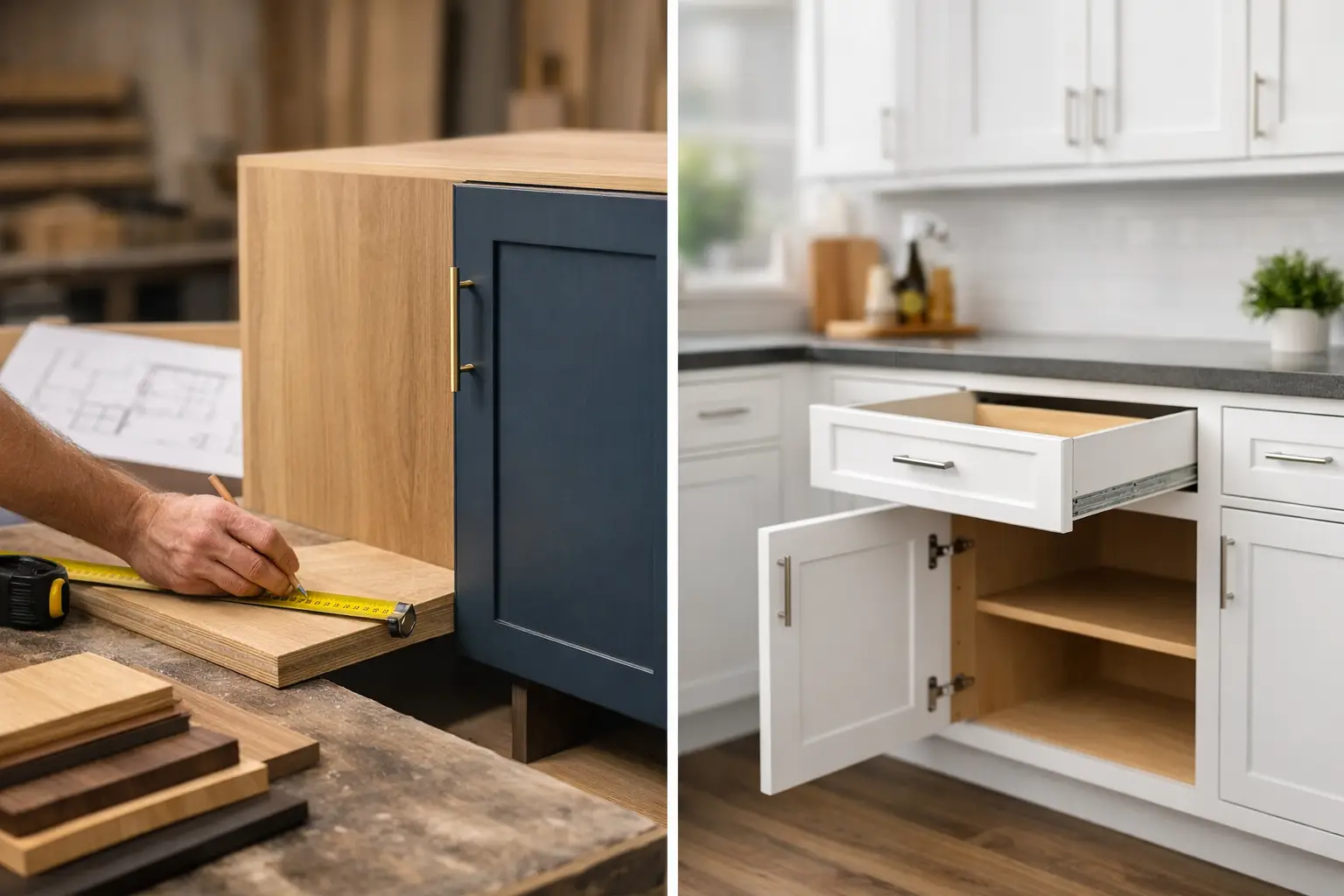
Custom Cabinets vs Stock Cabinets
If you're planning a kitchen, laundry room, mudroom, or bathroom update, the custom cabinets vs stock cabinets decision usually comes up faster than expected. Homeowners often start with style in mind, then realize the real question is how much flexibility, durability, and installation precision they want for the budget they have.
This choice affects more than appearance. Cabinets influence how well a room functions, how long materials hold up, and how smoothly the project moves from planning to installation. The right answer depends on your layout, your goals, and how important it is to get a tailored fit.
Custom cabinets vs stock cabinets: What is the difference?
Stock cabinets are pre-manufactured in standard sizes, styles, and finishes. They are built to fit common layouts and are usually available more quickly than made-to-order options. If your room is fairly straightforward and your priorities are cost control and faster turnaround, stock cabinets can be a practical choice.
Custom cabinets are built specifically for your space. That means the cabinet dimensions, storage features, wood species, finish, and overall design can be selected to match the room and the way you use it. With custom work, you're not trying to force your layout to fit the cabinet line. The cabinetry is created to fit your layout.
There is also a middle ground in many projects, often called semi-custom. While this article focuses on custom cabinets vs stock cabinets, it helps to know that some homeowners land between the two when they want more flexibility without going fully custom.
When stock cabinets make sense
Stock cabinets are often the right fit when the room has a simple footprint and the homeowner wants a dependable, budget-conscious solution. In many homes, especially where the existing layout works well, standard cabinet sizes can cover the basics without creating major compromises.
They also help when timeline matters. Since stock lines are produced in set styles and dimensions, they can often be sourced faster than custom pieces. If you're trying to complete a renovation on a tighter schedule, that shorter lead time can make a real difference.
Another advantage is predictability. Pricing is usually easier to estimate upfront because you're choosing from existing lines rather than designing from scratch. For homeowners who want a clean, updated look without chasing every possible design option, stock cabinets can keep the process simpler.
That said, simpler does not always mean better for every room. Standard sizing can leave filler gaps, unused vertical space, or awkward areas in older homes where walls are not perfectly square. In a basic layout, those issues may be minor. In a more customized renovation, they can become hard to ignore.
When custom cabinets are worth it
Custom cabinets make the most sense when the space itself needs a tailored solution. Older homes, unusual room dimensions, sloped ceilings, tight corners, and specialty storage needs are all situations where standard cabinet sizes can fall short.
They are also worth considering when you want the cabinetry to do more than just provide storage. Maybe you need deeper drawers for cookware, a built-in pantry wall, a better setup around a range hood, or cabinets that reach the ceiling for a more finished look. Custom work gives you control over those details.
From a design standpoint, custom cabinets offer a wider range of materials, finishes, door profiles, and construction choices. That can matter if you're aiming for a very specific style or trying to match cabinetry in another part of the home.
For many homeowners, the biggest benefit is fit. A well-built custom cabinet plan can make a room feel more intentional, more functional, and more polished because the storage was designed around the space instead of adapted to it.
Cost: upfront savings vs long-term value
For most people, budget is where the custom cabinets vs stock cabinets comparison gets serious. Stock cabinets usually cost less upfront. That lower starting price is the main reason they remain popular, especially for projects where the goal is a fresh update without a full premium build.
Custom cabinets typically cost more because they involve more design time, more labor, and more material choices. You're paying for personalization, craftsmanship, and precision. Depending on the scope, that price gap can be significant.
But upfront cost is only part of the picture. If stock cabinets require fillers, modifications, or layout compromises, the final result may not feel as efficient or refined. In some projects, those trade-offs are perfectly acceptable. In others, they can make the room feel like it was almost right instead of fully right.
Long-term value depends on how you plan to use the space and how long you expect to stay in the home. If this is a forever-home kitchen and function matters every day, custom may be easier to justify. If you're updating a guest bathroom or a secondary space, stock may be the smarter financial choice.
Quality and durability are not always equal
A common mistake is assuming all stock cabinets are low quality or all custom cabinets are top tier. The reality is more nuanced. There are decent stock lines and poorly built custom products. What matters is the construction quality, materials, hardware, and installation.
Look closely at cabinet boxes, drawer construction, hinges, slides, and finish durability. Solid wood doors, plywood box construction, soft-close hardware, and properly finished surfaces usually perform better over time than lower-cost materials and shortcuts.
Custom cabinets often allow for stronger construction methods and better material selection, but only if the project is planned and executed well. Stock cabinets can still perform nicely in many homes when you choose a reputable line and pair it with careful installation.
This is one reason contractor guidance matters. The cabinet product itself is only one part of the result. If measurements are off or installation is rushed, even good cabinetry can end up looking uneven or wearing poorly.
Timeline and project flow
Timeline is another major difference in custom cabinets vs stock cabinets. Stock cabinets generally move faster because they are already designed and ready to order in standard configurations. That can help reduce waiting and keep a remodel moving.
Custom cabinets usually require more planning upfront. Measurements need to be exact, design selections need approval, and fabrication takes time. If you're already managing a broader renovation, that longer lead time needs to be built into the schedule from the beginning.
That doesn't mean custom projects are a problem. It just means expectations need to be clear. A well-managed remodeling project accounts for lead times, communicates milestones, and helps homeowners understand what is happening at each stage. Clear communication can make a longer process feel much less stressful.
Which option is better for resale?
There is no automatic winner here. Buyers appreciate attractive, functional cabinetry, but resale value depends on the overall home, neighborhood, and quality of the renovation. A clean, well-installed stock cabinet kitchen can absolutely support resale. A thoughtfully designed custom kitchen can also be a strong selling point.
The best approach is to avoid overbuilding or underbuilding for your home. If the rest of the house is high-end and the kitchen is a centerpiece, custom cabinets may make sense. If you're making practical improvements in line with the neighborhood, stock cabinets may provide the right balance.
How to decide between custom and stock
Start with your room, not just your Pinterest board. Ask whether your layout is straightforward or challenging. Think about how much storage customization you actually need, how long you plan to stay in the home, and whether your budget has room for upgrades that improve daily use.
Then consider what will bother you a year from now. Some homeowners are perfectly happy with standard sizes and limited finish options. Others know they will notice every filler strip, every wasted corner, and every missed opportunity for better organization.
This is also where honest planning matters. A good contractor will not push custom cabinets just because they sound premium, and will not push stock cabinets just to hit a lower price point. The right recommendation should match the space, the budget, and the expectations for the finished result.
For homeowners in Summerville and nearby communities, that balanced approach often leads to the best renovation experience. Northern Details believes the process should feel clear from the start, with real guidance on where to save, where to invest, and what will hold up over time.
The best cabinet choice is the one that fits your home, your budget, and the way you actually live. If the space is simple and you want a practical upgrade, stock cabinets may be exactly right. If the room needs precision and you want every inch to work harder, custom cabinets may be worth every dollar. A well-planned project makes either option stronger, and that starts with honest expectations and careful craftsmanship.


Comments